Planning

Providing the tools you need for successful planning applications and project management.

Our Experts

Planning can feel like a bit of a maze, but with in-depth knowledge of policies across the country, our planning consultants can provide the tools you need to succeed.

We offer specialist advice on a full range of services from planning applications and appeals, to permitted development rights, local plan ‘call for sites’ and pre-application advice. We will manage the process for you and find a solution that brings your ideas to life.

We also know that for every project, there’s a bigger picture beyond planning. Our planning consultants will bring in specialists from around the business to help with the design, delivery and valuation of your project, giving complete honesty at all times. This way, you can be confident your project is heading in the right direction.

With our planning consultants working across the public and private sectors, we offer expertise in everything from residential and commercial, to agricultural, leisure and energy. We love any opportunity to tackle new and unorthodox projects, so whatever your planning needs, we have you covered.


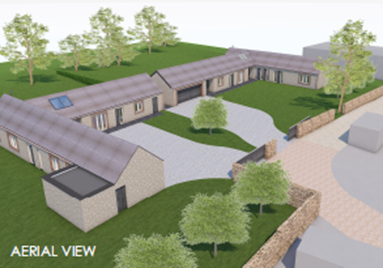
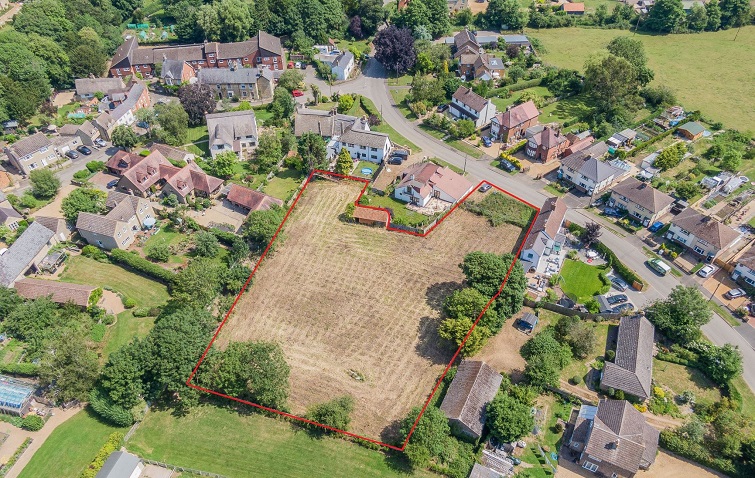
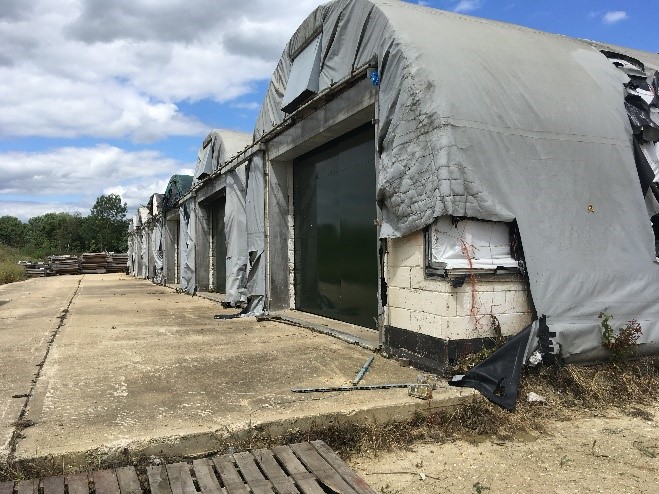
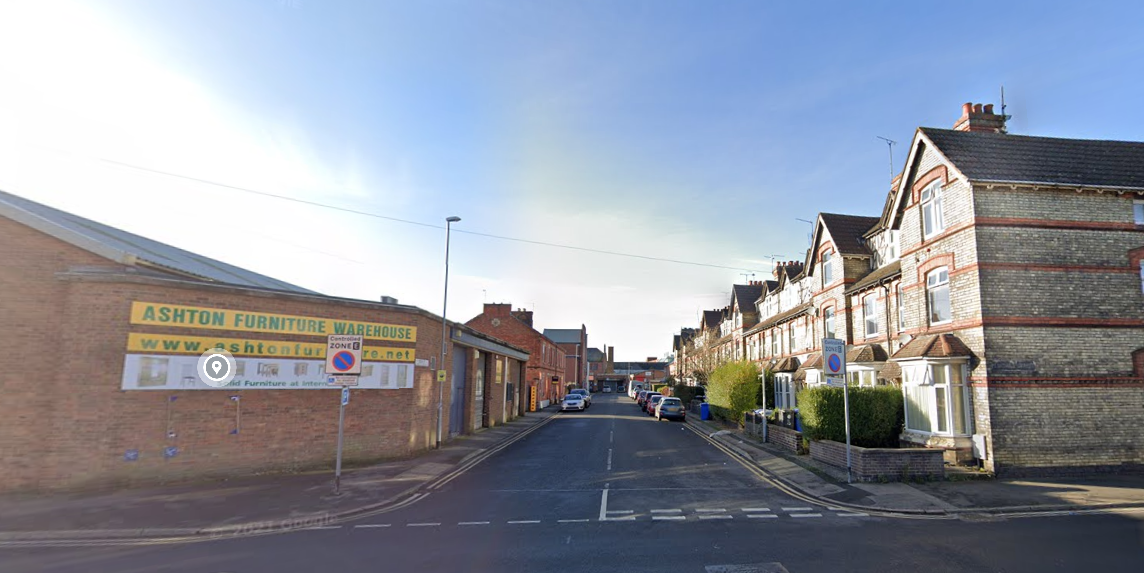
Planning Applications Class Q And Class R Planning Appeals Town Planning Getting A Site Allocated Planning Applications
Our Experts
Location
+
Stuart Thomas
Stuart Thomas
Chief Executive Officer
PJ Triplow
PJ Triplow
Head of Planning
Nick Williams
Nick Williams
Partner and Planning Consultant
Amy Henson
Amy Henson
Principal Planning Consultant
Sean Bennett
Sean Bennett
Principal Planning Consultant
Kirsten Sloth-Nielsen
Principal Planning Consultant
Lauren May
Lauren May
Senior Planning Consultant
Mike Lloyd
Mike Lloyd
Senior Planning Consultant
Alex Bruce
Alex Bruce
Senior Planning Consultant
Freya Carroll
Freya Carroll
Senior Planning Consultant
Graham Clark
Graham Clark
Senior Planning Consultant
Immy Platt
Immy Platt
Planning Consultant
James Lunn
James Lunn
Graduate Planning Consultant
Caitlin Westwood
Caitlin Westwood
Apprentice Planning Consultant
Nuria Smith
Nuria Smith
Head of Business Support
Karen Morris
Karen Morris
Business Support Co-Ordinator

Town and country planning, to give it its full title, is the regulatory process the Government uses to control the development of land. The UK planning system was established in 1947 to provide a sense check on development. It has been growing steadily more complicated ever since.

The system is administered by several hundred local planning authorities (LPAs). In most cases, the LPA is the local Council, the exception being within national parks, where the park authority is the LPA. Each LPA is charged with preparing a local plan, which sets out policies for developing the land in its area, and with approving planning applications, which should usually be determined in line with the local plan.

While planning is understandably perceived as a negative process by many, it can be a force for positive change. Town planners may be found working alongside urban designers to create new city quarters or with conservation architects to safeguard treasured buildings and spaces.

You will need planning permission for anything deemed to be ‘development’ by the various Town and Country Planning acts. Essentially, this means:

• Putting up new buildings or structures

• Extending existing buildings or altering their outward structure

• Changing the use of land or buildings

• Engineering operations which involve digging, tunnelling or altering the ground level

• Displaying certain types of adverts

All the above are subject to minimum size thresholds, so you won’t need planning permission to build a rabbit hutch or lay a garden path. There are also a number of things you can do within the grounds of a private house without seeking planning permission. These are covered in our permitted development section below.

Please note that, if your building is listed, you will need listed building consent to do things inside the building that would not normally require planning permission (such as taking out an internal wall).  Please take a look at our Heritage and Archaeology page for more guidance on this.

Things which do not constitute development include:

• Altering the inside of a building (unless it is listed or you are subdividing a house into more than one property)

• Painting the outside of a building or making like-for-like repairs (unless it is listed or you are in a conservation area)

• Any kind of planting, including trees and hedges

Like anything legal, this is a bit of a minefield, so if in doubt, give us a call.

The planning system places most land uses into a series of categories. Each category is known as a use class. You do not need planning permission to change the use of a building or parcel of land if the new use falls within the same use class as the old one. Certain changes between use classes are also allowed. These are set out in a governance document named the Use Classes Order. Any change between use classes which is not explicitly permitted by the Use Classes Order will require planning permission.
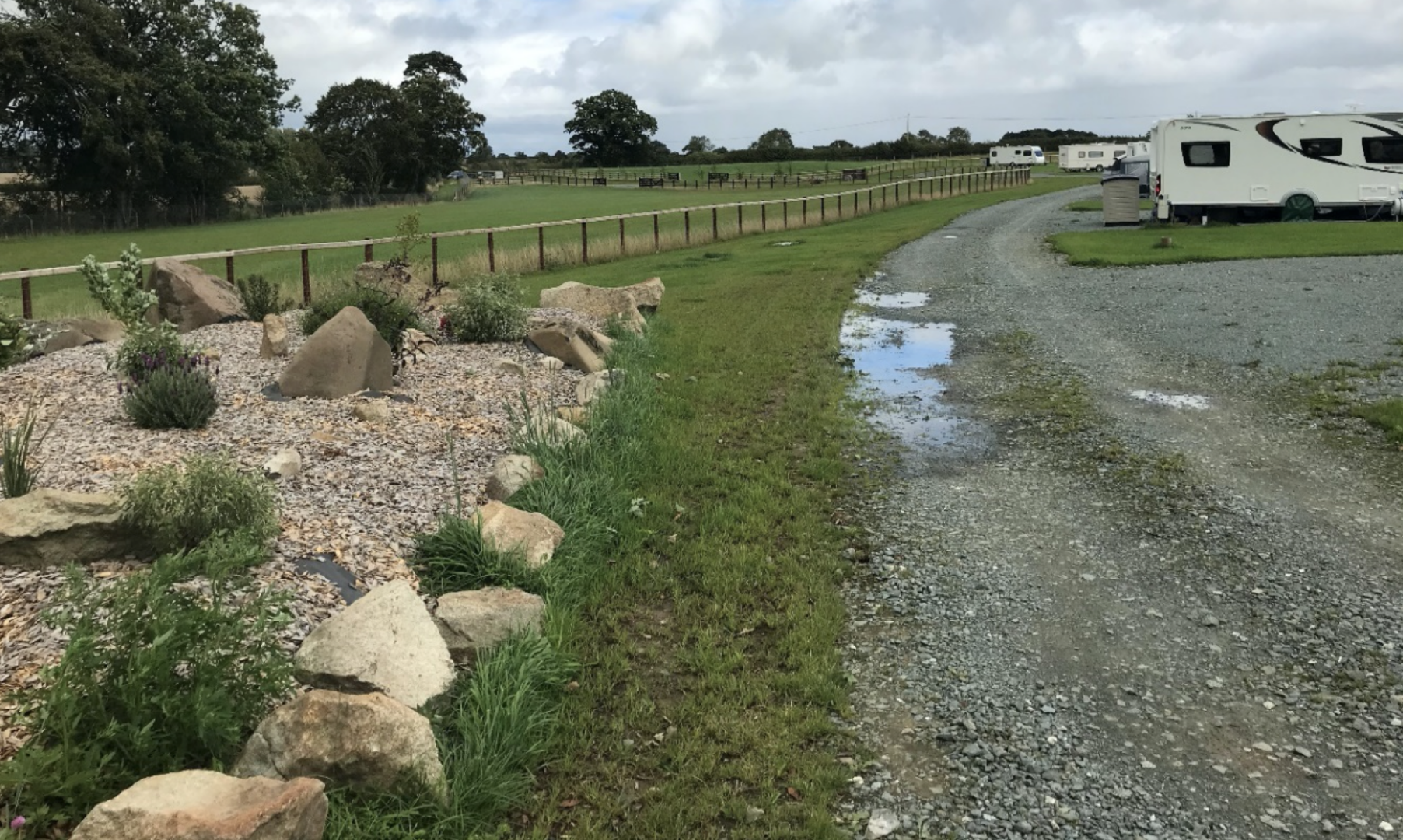
Some use classes are very specific, for example C1, which covers hotels and boarding houses. Others contain a broad range of seemingly unrelated uses. Class E is perhaps the broadest. It covers (amongst other things) shops, restaurants, gyms, banks, children’s nurseries and doctor’s surgeries. This means you can switch between any of these uses without planning permission.

Some uses don’t fit into any class. These are known as ‘sui generis’ uses. They tend to be uses with the potential to cause disruption to their neighbours, such as pubs, hostels, nightclubs, scrapyards and petrol stations. Some ‘sui generis’ uses can be changed without permission, but each has its own specific rules so it’s worth checking first.

As with any system involving categories and the law, there will always be grey areas. For example, a ‘public hall’ is Class F1 but a ‘community hall’ is F2. Unsurprisingly, many of these definitions end up being tested in the courts.

In certain circumstances, development can be carried out without seeking planning permission. This is known as permitted development or PD rights.

As mentioned in the previous question, certain changes of use are allowed under PD rights. For example, a building can be changed from a factory to a warehouse or from a takeaway to a shop without making an application. This is set out clearly in the Use Classes Order.

Perhaps the best-known use of permitted development rights is in relation to house extensions. The rules are surprisingly generous. You may extend your house backwards by up to four metres (for a detached house) and cover up to half your garden in outbuildings, both without planning permission. This is, of course, subject to certain restrictions, notably that new developments must not stand between the original house and a highway boundary. Also worth noting is that PD rights go with the land, not the owner. If you buy a detached house that has already been extended backwards by three metres, you will only be able to extend it by one metre yourself.
Sometimes, you will need what is known as ‘prior approval’ in order to exercise permitted development rights. This means you will have to make an application similar to a planning application but a little less onerous. PD rights in relation to putting up new agricultural buildings or converting barns to houses via the Class Q route are good examples of this.

Anybody can apply for planning permission on any piece of land. You do not need to be the owner. Once granted, planning permission runs with the land, not the applicant, so if you pass a site to somebody else, they can implement any permission obtained. Most planning permissions remain valid for three years from the date of approval.

To make an application, the following items need to be submitted to the relevant local planning authority:

• Completed application form and ownership certificates

• Site location plan at scale 1:1250 or 1:2500

• Any relevant plans, elevations and layout drawings

• Design and access statement (in most cases)

• Any supporting information needed (for example, a newt survey, flood risk assessment or noise report)

• The application fee (which will vary according to the scale and type of development)

Most local authorities offer a pre-application advice service. For a small fee, they will look at your proposal, advise whether they will support it and let you know what supporting information should accompany the application – as much or as little information as you like about your proposal can be sent. Bear in mind that, the more information given, the more accurate their advice will be. Some LPAs take a very dim view of applicants who do not use their pre-application service. We know who these authorities are, so we can ensure we follow the correct procedure for your specific location.

In a word: yes. This is actually far more common than you may think. Almost 10% of planning applications nationwide are retrospective and between 70% and 80% of these are approved, so if you are asked to make one, please don’t be alarmed.

In most cases, the reason for making a retrospective application will be that the Council has asked you to do so after discovering that something has been done without planning permission. Alternatively, it may be that you have just bought a property and would like to gain permission for something the previous owner did.

Either way, the procedure for making the application is exactly the same as it would be if you were applying in advance. With a retrospective application, you do, of course, have the advantage of being able to send photographs of your development alongside the various statements and drawings. The major downside is that, if permission is refused, the Council can ask for the development to be removed or the change of use reversed.

If the development in question happened a number of years ago, then you have the option of applying for a certificate of lawfulness instead. This can be done if a building has been complete for more than four years or if a change of use happened more than ten years ago. In each case, the onus will be on you to come up with the evidence. With a certificate of lawfulness, you only need prove that the development took place before the cut-off date; there is no need to submit drawings or environmental reports.

If a Local Planning Authority refuses your application, you have the right of appeal to the Planning Inspectorate, a Government body set up specifically for this purpose.

To make an appeal, you must fill in a form and send this to the Inspectorate, together with all the information submitted with the application and a statement of case saying why you believe the LPA’s decision is wrong. An Inspector will then review the decision and will decide independently whether the LPA was correct. If the appeal is allowed, the LPA’s decision is overturned and planning permission is granted.  If the appeal is dismissed, this means the Inspector agrees with the LPA and permission remains refused.

If you do not like the Inspector’s decision, it is possible to seek a judicial review, but this is a very expensive option.  To be successful, you will need to prove that the Inspector has acted unlawfully, which will seldom be the case. You cannot use a judicial review to challenge the Inspector’s professional opinion.

Most planning appeals are determined by written representations: submit your documents and the Inspector writes back with a decision. If you think your appeal would benefit from a live discussion, you can request an informal hearing. This gives you the chance to present evidence to the Inspector in something akin to a courtroom setting.

Around 30% of appeals are allowed (as of spring 2025). Hearings fare better than written representations, with a success rate of 40%, but they do cost a lot more and take a lot longer.  A typical written appeal takes around six months to determine. A hearing will take nearer twelve months.

When a local planning authority receives an application, the first thing it should do is check whether the proposal conforms with the relevant planning policies. So, what are these policies and where does the LPA find them?

In regions with devolved government (Wales, Scotland and Northern Ireland) planning policy is provided by the relevant assembly. Within the English regions, policy is provided by central government.  Despite some differences in procedure, the principles of planning are fundamentally the same across the UK, with the focus being firmly on minimising harm to the environment.

Each LPA must prepare a local plan, which sets out how government policy is to be applied within its area of responsibility. Policies are typically grouped around land uses, so most local plans will have sections dealing with housing, employment, leisure, open space and town centres. Most will also have policies relating to specific settlements, sites or protected areas. When determining applications, the LPA must refer to any relevant policies in its decision.

The other role of local plans is to allocate sites for different types of development. When you hear words like ‘allocation’, this refers to sites which have been allotted a specific use in the local plan.  Once a site is allocated, any application on that site for that specific use should be acceptable in principle. On the flip side of this, planning officers will often use the existence of a nearby allocation as a reason to refuse planning permission elsewhere.

Planning permission handles the impact of a development on its neighbours and its wider environment. Building regulations relate to the structure of a building and whether it conforms to specific design criteria. The two processes are entirely separate, but both are handled by local authorities and both are needed when putting up buildings, hence the potential for confusion.

The level of detail needed for planning drawings is a lot less than for building regulations.  This is because the planning officer is only trying to establish whether the building is acceptable in principle and what the impact on its surroundings will be. He or she will be most interested in the size, shape and outward appearance of the building, along with access and drainage arrangements and its impact on plants and animals. The building control officer will want to know the precise measurements and specifications of a range of design features both inside and out, so will need close-up technical drawings of these. They will not be interested in the wider setting of the building.

Given that you will need both planning permission and building regulations approval for your new building, it makes sense to commission both sets of drawings from the same architect and appoint your planning consultant at the same time.

Our Experts
Stuart Thomas
Stuart Thomas
Chief Executive Officer
PJ Triplow
PJ Triplow
Head of Planning
Nick Williams
Nick Williams
Partner and Planning Consultant
Amy Henson
Amy Henson
Principal Planning Consultant
Sean Bennett
Sean Bennett
Principal Planning Consultant
Kirsten Sloth-Nielsen
Principal Planning Consultant
Lauren May
Lauren May
Senior Planning Consultant
Mike Lloyd
Mike Lloyd
Senior Planning Consultant
Alex Bruce
Alex Bruce
Senior Planning Consultant
Freya Carroll
Freya Carroll
Senior Planning Consultant
Graham Clark
Graham Clark
Senior Planning Consultant
Immy Platt
Immy Platt
Planning Consultant
James Lunn
James Lunn
Graduate Planning Consultant
Caitlin Westwood
Caitlin Westwood
Apprentice Planning Consultant
Nuria Smith
Nuria Smith
Head of Business Support
Karen Morris
Karen Morris
Business Support Co-Ordinator
Create Something Brilliant.
Speak to a Member of Our Team Today.